
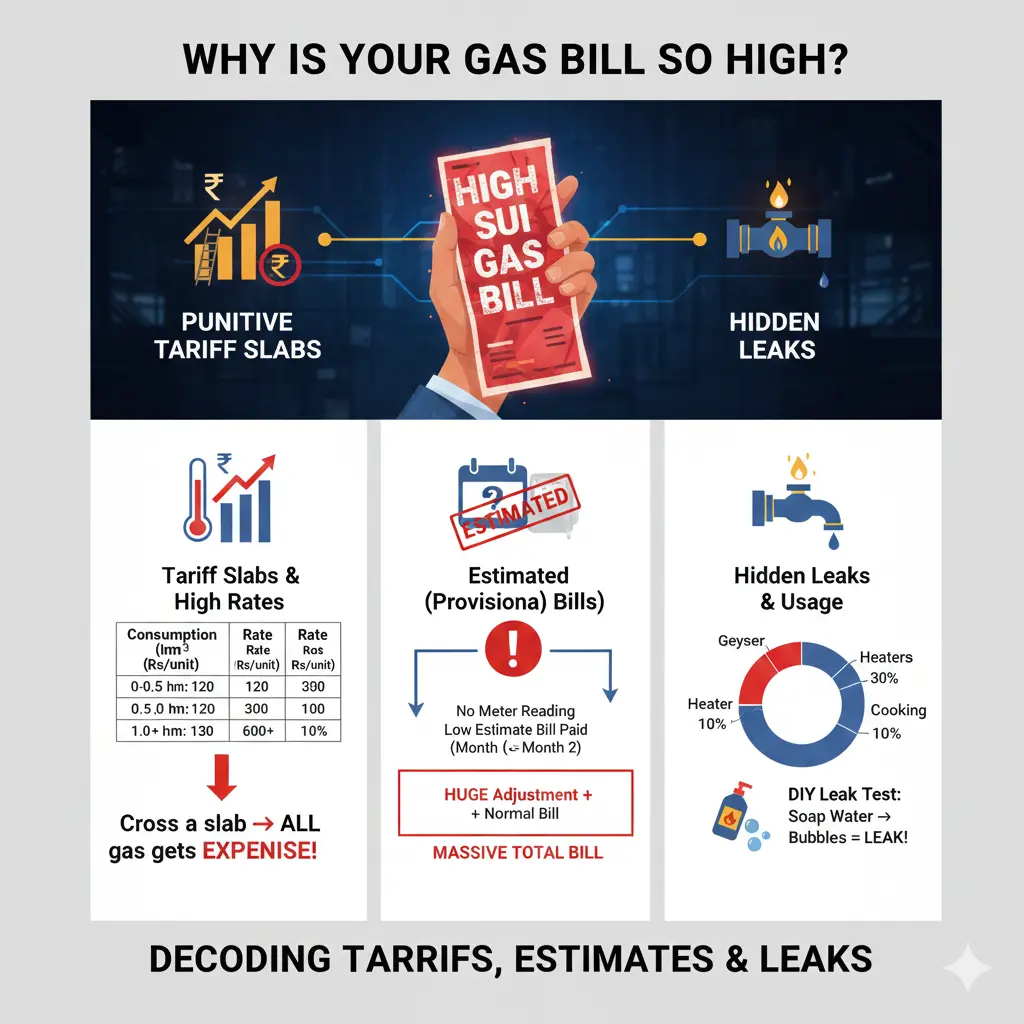
After checking your bill online, the immediate next question for most consumers is: Why is it so high? The reality is that a High Sui Gas Bill is usually caused by a perfect storm of government policy, punitive tariff structures, and hidden consumption in your home.
We break down the three main reasons your SNGPL or SSGC bill skyrocketed—and actionable steps you can take to bring it back down.
High Sui Gas Bill: The Tariff Trap That Causes Your High Sui Gas Bill
The single biggest reason for a High Sui Gas Bill is the multi-tiered tariff structure mandated by OGRA. Understanding this mechanism is the first step to reducing your cost.
Avoid the High Sui Gas Bill Shock: Understanding the Slab Mechanism for a High Sui Gas Bill
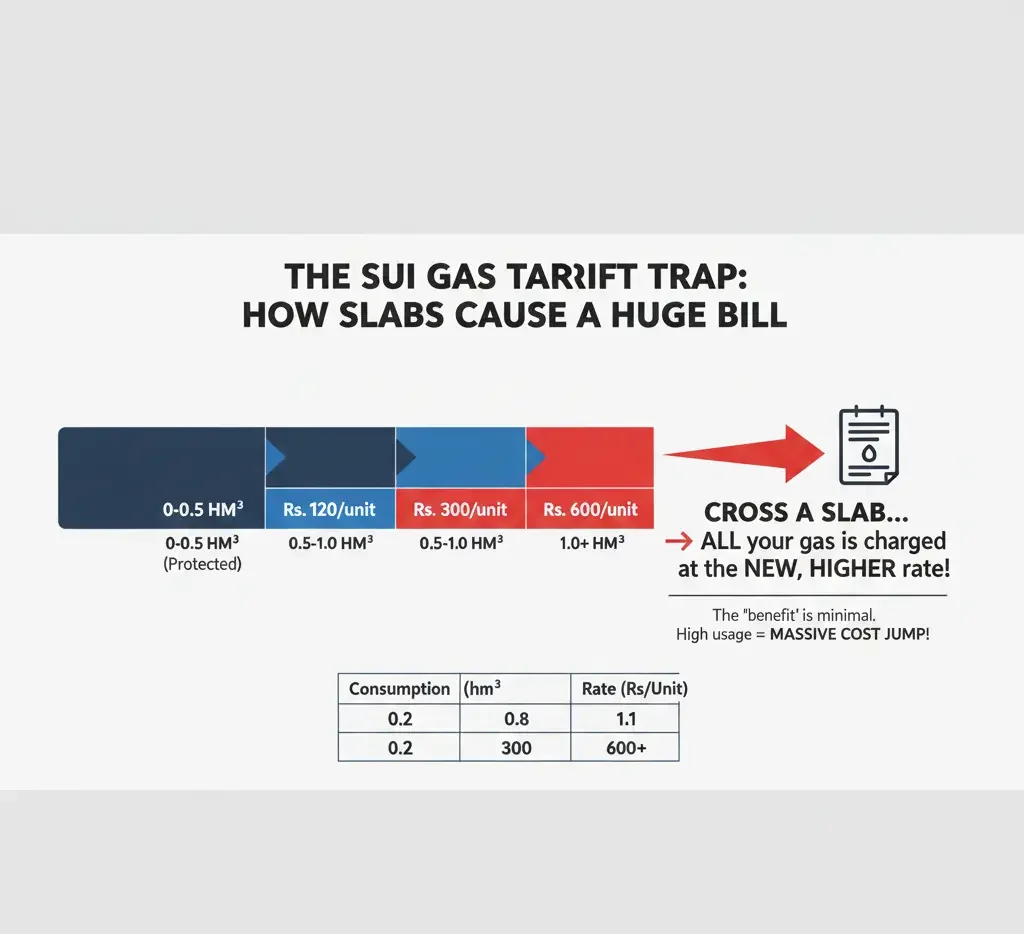
The Consumption Tiers: Sui gas rates are divided into consumption slabs (e.g., up to 0.5 hm³, up to 1.0 hm³, etc.). When your consumption crosses a boundary into the next tier, the higher rate is retroactively applied to all units consumed in that slab. This sudden jump is the primary cause of bill shock.
The One-Slab Benefit: While a small benefit of only the immediately preceding slab is often applied, once you use a high amount (e.g., above 4 hm³), you are often charged a flat, very high rate for all your consumption, eliminating any previous relief.
Protected vs. Non-Protected Status: Consumers whose average winter consumption (Nov-Feb) stays below a certain threshold (e.g., 90 cubic meters or 0.9 hm³) are classified as “Protected.” Exceeding this makes you “Non-Protected,” drastically increasing the Fixed Charges on your High Sui Gas Bill.
Fixed Charges and Price Hikes
Fixed Charges: These monthly minimum fees (Rs. 600 for Protected, Rs. 1,500 or more for Non-Protected) are added to your bill regardless of consumption, ensuring you have a significant minimum charge even if you use very little gas.
RLNG Cost: Gas companies often blend expensive imported Liquefied Natural Gas (RLNG) with local gas. The higher cost of RLNG is passed down to all domestic consumers, fueling the overall price per unit.
Estimated Billing and the High Sui Gas Bill Cycle
The second major cause of a sudden High Sui Gas Bill is not actual usage, but the system of Estimated Billing or “Provisional” bills.
The Provisional Bill Nightmare
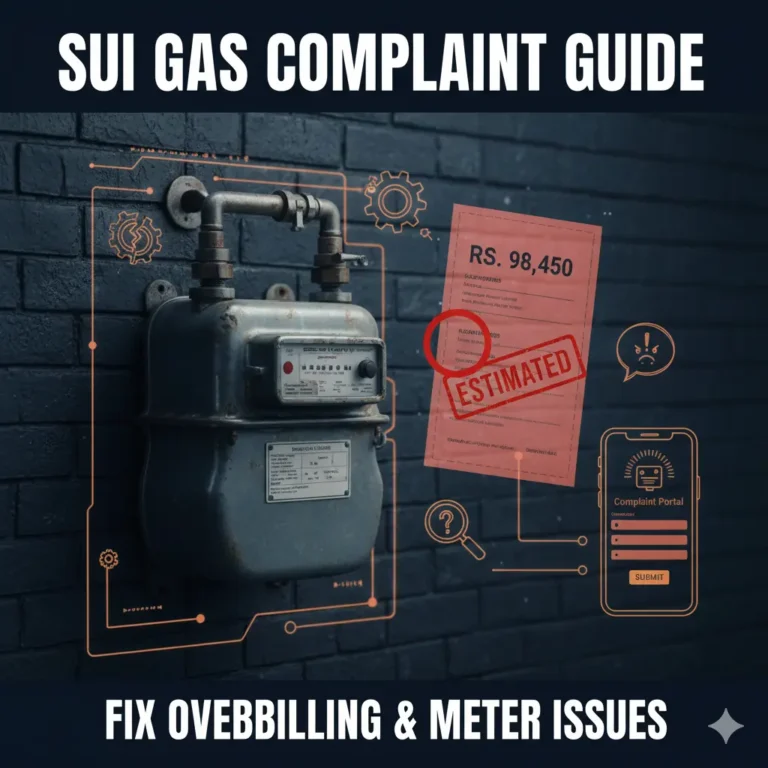
What is an Estimated Bill? When a meter reader cannot access your meter (locked gate, unapproachable, or meter fault), SNGPL or SSGC issues a Provisional Bill. This bill is estimated based on your previous average consumption, often underestimating the real-time usage during cold winter months.
The Adjustment Shock: When the reader finally takes an actual reading (sometimes months later), the system calculates the massive difference between the low estimated bills and the high actual consumption. This difference is added as a lump sum “Adjustment” or “Arrears” to your current bill, resulting in a single, astronomical High Sui Gas Bill.
Action Steps to Avoid Estimated Bills:
Ensure your meter is easily accessible to the meter reader.
Note your meter reading and contact your gas company (SNGPL/SSGC) if you suspect a reading has not been taken.
Hidden Consumption and Reducing Your High Sui Gas Bill
Sometimes, the high bill is due to usage you aren’t even aware of. This is where hidden leaks and inefficient appliances play a role.
Inefficient Appliances
The Geyser Effect: The gas water geyser is the biggest gas consumer in a typical Pakistani home, especially if it lacks proper insulation or is run all day.
Old Heaters: Older, inefficient gas heaters can consume gas rapidly, pushing you into the punishing higher consumption slabs.
The Silent Cost: Gas Leaks
An undetected leak, even a small one, means the meter is turning 24/7, leading to a constant and unnecessary High Sui Gas Bill.
The DIY Soap Test: Mix liquid soap and water in a spray bottle. Spray the solution onto all pipe joints and connections near the meter and appliances. If bubbles form and grow, you have a leak.
The Meter Test: Turn off all gas appliances (geyser, stove, etc.). Check your gas meter. If the dial numbers continue to move after 15–20 minutes, you have a leak and must call a licensed professional immediately.
Frequently Asked Questions (FAQs)
Q1: Does a Provisional Bill always lead to a High Sui Gas Bill later?
Not always, but usually. Since estimated bills are typically lower than actual winter consumption, the accumulated difference that must be paid when the actual reading is taken often results in a massive, High Sui Gas Bill the following month.
Q2: If I restrict my consumption, how long will it take to stop getting a High Sui Gas Bill?
You will see the impact immediately in your next bill. However, if you are currently paying off a prior Adjustment (arrears from a provisional bill), the full benefit of lower consumption may be delayed until those arrears are cleared, meaning you still might get a High Sui Gas Bill temporarily.
Q3: What are the main components (taxes, charges) contributing to my High Sui Gas Bill?
The total of your High Sui Gas Bill is built from: Gas Charges (based on slab rate and consumption), Sales Tax (GST), Fixed Monthly Charges (based on protected status), Meter Rent, and any accumulated Arrears/Adjustments from previous months.