
Don’t Let Winter Bills Shock You: Here Are Your Gas Saving Tips
The winter season brings cozy comfort, but it also brings the highest Sui Gas bills of the year. After learning how to check your bill and read your meter, the inevitable question remains: “How do I actually cut my consumption?”
The secret to a lower bill isn’t just shivering in the cold; it’s recognizing that most Pakistani home appliances especially geysers and heaters are highly inefficient, wasting more gas than they use.
We’ve compiled the nine most effective, proven Gas Saving Tips that you can start implementing today. These simple fixes can cut your monthly Sui Gas Bill by up to 50% without sacrificing your comfort.
The Root Cause—Why Inefficient Appliances Cost a Fortune
The reason your bill explodes in winter is simple: you rely on appliances that burn massive amounts of gas without giving you full value for the energy used.
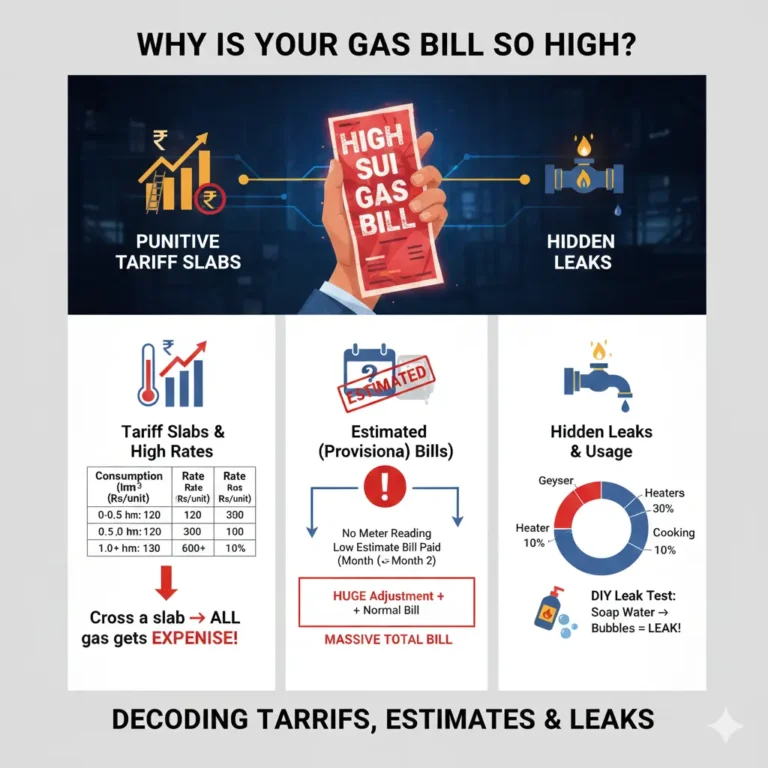
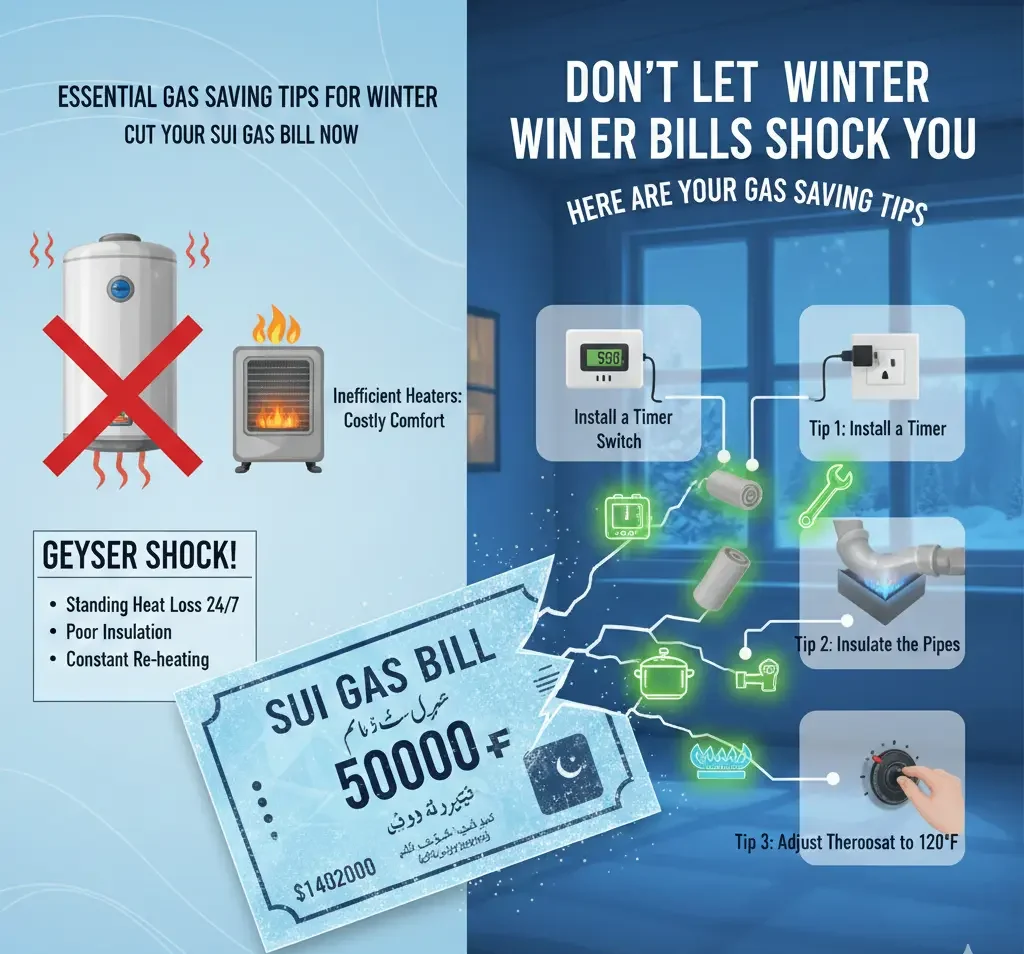
Geyser Shock: The Biggest Leak in Your Gas Consumption
The gas water geyser is typically the single largest gas consumer in a Pakistani home. Standard storage geysers are notorious energy hogs.
- Standing Heat Loss: Even if you don’t use hot water, a typical geyser constantly burns gas to maintain the water temperature inside the tank. This constant re-heating is pure waste, essentially keeping a small furnace running 24/7.
- Poor Insulation: Locally made geysers often lack adequate insulation, causing heat to escape rapidly and forcing the burner to switch on more frequently.
Inefficient Heaters: Costly Comfort in the Winter
While heaters provide crucial warmth, older or low-quality gas heaters are terrible at conserving energy. They consume gas rapidly, pushing you swiftly into the punishing higher consumption slabs on your bill, which quickly negates any other Gas Saving Tips you might be using.
Quick-Fix Gas Saving Tips for Geysers (The Timer & Insulation Trick)
Targeting your geyser provides the biggest opportunity for immediate savings.
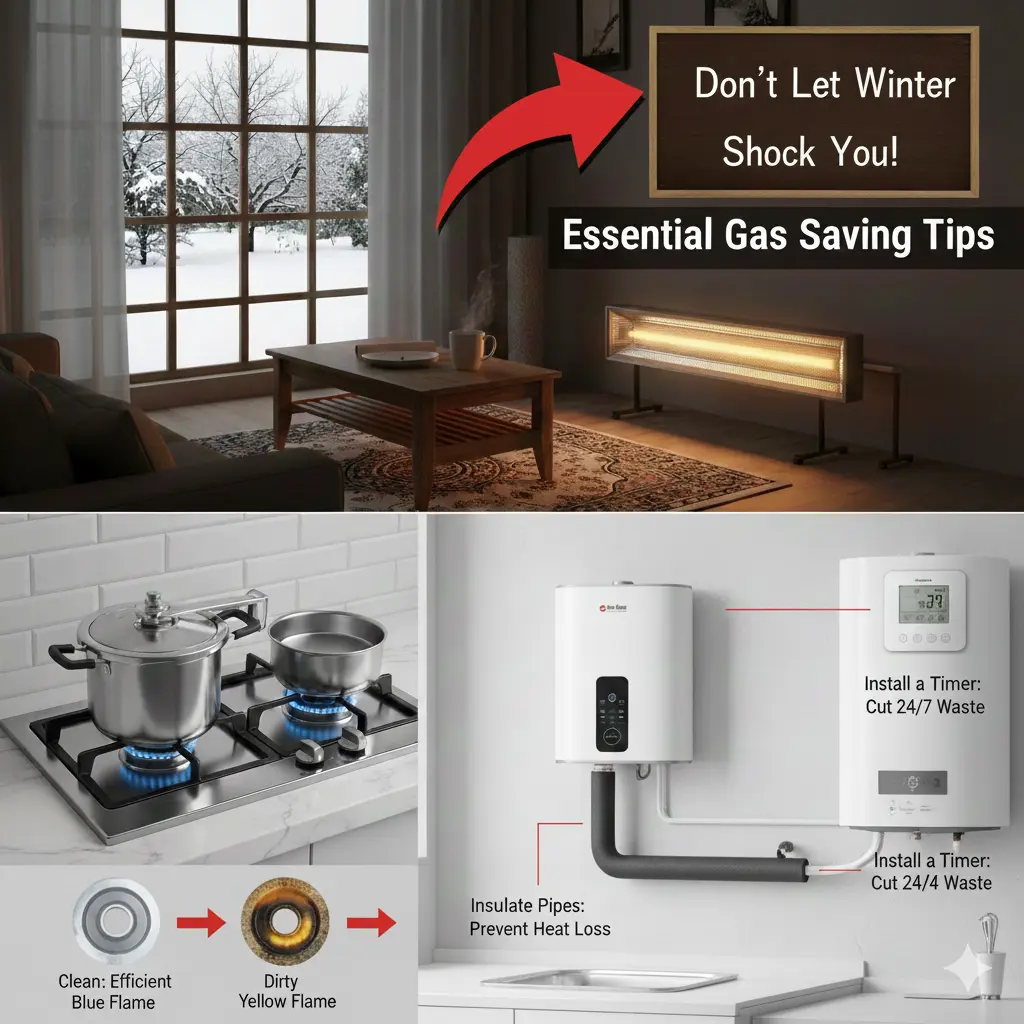
Tip 1: Install a Timer Switch (Your #1 Weapon): This is the most crucial step. A timer ensures your geyser only heats water for two specific periods a day (e.g., 5 AM to 8 AM for morning use, and 5 PM to 7 PM for evening use). By turning the unit completely off for 15+ hours a day, you eliminate all standing heat loss and waste.
Tip 2: Insulate the Pipes: Wrap hot water pipes (especially the pipe leaving the geyser) with foam insulation (easily available at hardware stores). This prevents heat from escaping on its journey to your tap, meaning the geyser doesn’t have to work as long.
Tip 3: Adjust the Thermostat: Most geysers are set to a scalding hot temperature by default. Lowering the internal thermostat (usually accessible via a small knob or panel) to a comfortable temperature (around 120°F or 50°C) saves gas, as the burner runs for a shorter duration.
Smart Usage and Simple Gas Saving Tips in the Kitchen
Even the way you cook affects your monthly bill and requires good Gas Saving Tips.
Tip 4: Use Pressure Cookers: Pressure cooking uses significantly less gas than boiling food on an open flame for extended periods. It’s a faster, more efficient way to prepare meals.
Tip 5: Match the Flame to the Pot: Never use a large burner for a small pot. The flames should not lick up the sides of the vessel. Ensure the flame is entirely underneath the base of the pot for maximum heat transfer and efficiency.
Tip 6: Maintain Your Burners: Clogged or dirty burners produce a yellow or orange flame, which is highly inefficient. A clean burner produces a clean blue flame, signaling optimal combustion and better Gas Saving Tips effectiveness.
Long-Term Gas Saving Tips & Appliance Upgrades
These tips require a small upfront investment but offer maximum long-term relief on your Sui Gas Bill.
Tip 7: Consider Instant Geysers (Tankless): While the initial cost is higher, instant geysers only heat water on demand, eliminating 100% of the standby energy loss associated with storage tanks. This is the single most effective long-term Gas Saving Tip.
Tip 8: Seal Air Leaks: Gas heaters warm the air in a room. If air is constantly escaping through gaps around windows or doors, the heater must run constantly. Seal these drafts with weather stripping or caulk.
Tip 9: Service Heaters Annually: Just like a car, your heater needs maintenance. Annual servicing ensures the burner is clean, resulting in maximum heat output for minimum gas consumption.
Frequently Asked Questions (FAQs)
Q1: Do electric heaters save gas compared to gas heaters?
Yes, they do, but they shift the cost. Using an electric heater saves natural gas entirely, but you will see a corresponding increase in your electricity bill. The choice depends on which utility rate is currently cheaper in your area.
Q2: Can insulating my gas pipes count as a Gas Saving Tip?
Absolutely. Insulating the gas pipes, especially if they run outside or through a cold space, prevents the gas inside from cooling down too much before it reaches the burner. This helps maintain efficiency.
Q3: Do instant geysers save gas compared to storage geysers?
Yes, significantly. Because instant geysers lack a storage tank, they eliminate the “phantom load” of continuously re-heating water. This is a crucial Gas Saving Tip that can result in 20% to 50% savings on your water heating costs.
Q4: Is turning appliances on and off constantly a good Gas Saving Tip?
No, not usually. While turning off your geyser with a timer is great, frequently turning heaters on and off causes them to burn extra gas to rapidly reheat the cold room air. It is better to lower the thermostat slightly than to cycle the unit completely off and on throughout the day.